Image

Clock In Class — notes from the floor

I've had around sixteen jobs. Security, building sites, roofing, meat lines, a carwash, a bed factory, picking on an LLOP, goods-in, and now a machine.

Every time I changed, I believed the next one would be better. Different place, different people, different pay. Every time, it turned out to be the same story with different furniture. Fake smiles at induction. A manager who counts every minute. A schedule that moves under you. Somebody in the team who's carried by everyone else.

Last year my current place made people redundant. They kept me because the machine I run is awkward and not many people can do it. The paperwork asked everyone which role they wanted to keep, and plenty of people wrote in their own third option: redundancy.

That's when it hit me again. Everyone is replaceable. No company lasts forever. And swapping one employer for another doesn't change that. It only changes the scenery.

Here's the short answer, in case you're on a break: change jobs when the problem is the place. Build something of your own when the problem is the pattern. Most people on the floor have both, which is why the usual answer is to stay, build, and decide your exit on a number, not on a bad day.

Industrial Psychology: Five Signs It's the Place

Sometimes it really is the place. These are the signs I'd take seriously.

  1. Safety is treated as optional. You report hazards, and nothing happens. Or you report something and end up feeling like the problem. If this is your site, don't sit on it. Use your safety route, and think hard about whether you want to stay.
  2. The job changed under you, and the pay didn't. One person now does what two used to do. The load went up, the rate stayed put, and nobody discussed it.
  3. Your body is paying early. Not “sore after a long week.” Pain that's there every shift, and nobody will adjust anything to help.
  4. There's no path, and nobody pretends there is. You've asked about progression or training. You got a shrug.
  5. You dread the walk-in, every shift, for months. Not one bad week. A long, steady dread. If it's affecting your health, speak to a doctor as well as thinking about the job.

If two or three of those are true, the problem is probably the place, and leaving is a sensible option.
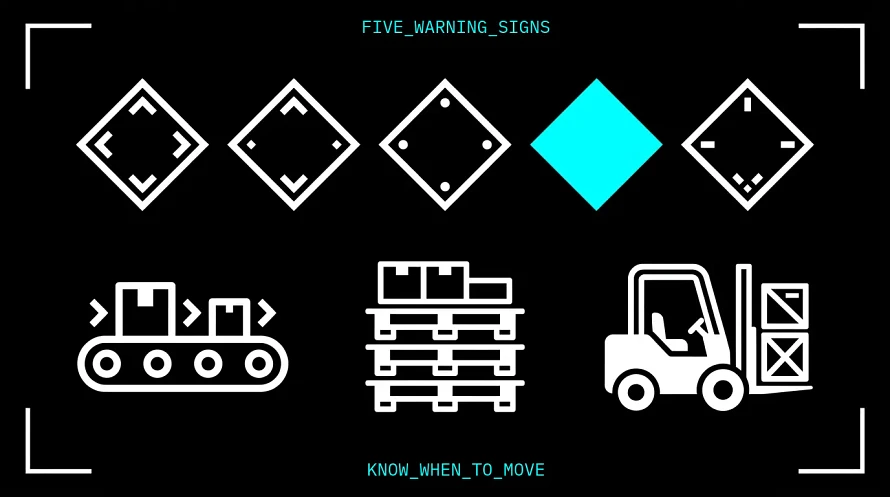
Five warning markers above symbols representing production work, pallet handling and industrial logistics, illustrating signs that a workplace may be the problem.

Now the harder sign.

If you've left several jobs for the same reasons, the problem travels with you. The shape of working for someone else, with someone else's schedule, someone else's targets, and someone else's say over your income, follows you through the door. A better employer helps. It doesn't change the shape.

That's where the second half of this article matters.

Technical Sovereignty: What Actually Travels With You

Before you decide to go anywhere, ask what you'd take with you.

  • Licences and tickets. Forklift, LLOP, anything formal and portable.
  • Skills that work on any floor. Fault-finding, setting up, picking accuracy, safe driving, training others.
  • Your own record. The notes, dates and results from your own log. They're yours, and they go wherever you go.
  • People. Colleagues and ex-colleagues who'd vouch for you.

Here's the uncomfortable one. Being the only person who can run one awkward old machine isn't a portable skill. It makes you valuable to one employer and invisible to every other. I know. I'm in that position. They kept me because of it, and it didn't make me feel safe. It made me feel like part of the machine.

Know which of your skills travel and which are glued to one site. Build the portable ones deliberately.

Five questions to ask before you sign at the next place

If you do move, don't take the smile at induction as the answer. Ask:

  1. What does the shift pattern look like, and how much notice do you get when it changes?
  2. How is overtime decided? Can you say no?
  3. What happens when a fault or a target goes wrong? Who gets the blame?
  4. How many people have left in the last year? A high number tells you something.
  5. Can I speak to someone who works on the floor? Ask to see the actual line, not just the office.

You won't get perfect answers. But you'll learn more from how people answer than from what they say.

Physical Routine: Count the Body

Every physical job has an expiry date, and it's set by your knees, your back and your sleep.

I've watched people give those things away for years without noticing. A long-day week, and my legs burn from the first hour to the last. That's me being forty-one. What am I at fifty-one if nothing changes?

So count it. If the job spends your body faster than you can afford, that's not toughness. That's a deadline. The question isn't “can I keep doing this?” It's “what will this job have left of me by the time I stop?”
A worker silhouette surrounded by symbols for production, pallet handling and industrial material transport, representing the physical toll of shift work.

If the honest answer is “not much,” that's a reason to move, and a reason to start building something that doesn't use your body, in whatever time and energy you have left.

Exit Architecture: Quit on a Number, Not on a Bad Day

Here's the idea that changed how I think about all of this.

Don't make the decision on the day you're furious. Make it on a day you're calm, and write it down as a number.

I leave when I have ___ months of bills saved, and my own income covers ___ percent of them.

Fill in the blanks honestly. Three months of bills and ten percent covered is a very different position from twelve months and fifty percent. Neither is wrong. They're just different levels of risk, and you get to choose yours.
Minimal white calendar with a cyan square, symbolising a planned and deliberate career transition.

Then keep the job while you build. Every month you stay and build, the number gets closer. Every bad day you stay and build, the bad day costs you less, because you know there's an end date.

A note on timing. In some places, being made redundant can come with a payout, and resigning usually doesn't. The rules differ everywhere. Check yours before you hand anything in, and don't resign on a bad day.

This isn't about staying forever. It's about leaving on your terms, with a number behind you, instead of on the worst week of the year with nothing.

What Just Happened (In Case You're Reading This on a Ten-Minute Break)

  • Changing jobs fixes the place. It doesn't fix the pattern.
  • Five signs it's the place: 1. unsafe and ignored, 2. the job grew, and the pay didn't, 3. your body is paying early, 4. no path, 5. months of dread.
  • If you keep leaving for the same reasons, the pattern is travelling with you.
  • Know which of your skills travel. Being the only one who can run one machine doesn't.
  • Ask five real questions before you sign anywhere new.
  • Count what the job is spending: knees, back, sleep.
  • Quit on a number you wrote on a calm day, not on a bad one.

Build the Second Half of That Sentence

The number only works if something is building toward it.

The 2-Hour Machine-Side Asset Blueprint is free at clockinclass.com. It's where you start: find your real two hours, pick the one thing you're building, and set a review date, so the second blank in that sentence starts filling in.

No fake smiles. No corporate waffle. Just a straight plan, and a number to aim at.

You don't have to choose between staying and going today. You just have to stop having nothing behind you either way.

Start here if you haven't: The Better-Week Lie: How to Build Something on the Side When Your Shifts Never Stay the Same

Image

Clock In Class — notes from the floor

I had a job that had to run slow. Heavy material, tricky tension, no way round it. Partway through the run, the front of the line slowed down by itself while the rest carried on at its usual pace. It wasn't the first time. I'd had the same fault on a similar job the year before.

So I did what you're supposed to do. I stopped it, restarted it, ran on, and reported it to my manager that same day.

Some time later, a more senior manager and a mechanic came over and asked what had happened. I told them. Then the senior manager asked me to recreate it.

I couldn't. It was running fine. The same reel, at the same speed, before the fault and after it. The mechanic had a theory about a part slipping, which didn't fit the facts, and the answer I got was that it would probably sort itself out. Then they both went away.

I report issues regularly. The kit is old. Faults keep coming. And I know how this ends. One day one of them will land on a form with my name typed next to it, not because I did anything wrong, but because I was the one standing there.

That's the whole lesson. A spoken report disappears. A written one answers the question.

Here's the short answer, in case you're on a break: you don't beat an impossible target by arguing with it. You make the conditions impossible to ignore. Write down what happened, ask for the target in writing, and ask which thing they want protected when two things clash.

One note first. This is practical advice from someone on the floor, not legal advice. Workplaces, contracts and rules differ everywhere.

Technical Sovereignty: The Record That Answers “Can You Recreate It?”

The habit is simple. Write down what happens, when it happens, in plain words. It takes ninety seconds.

For every event worth noting, capture:

  • Date and time.
  • The job. What you were running, picking or moving.
  • The conditions. Speed, rate, load, staffing, equipment state.
  • What happened. Facts, in order. No adjectives.
  • Who you told, and when.
  • What they said.

Here's what an entry looks like on a machine:

  • Tuesday 10:40. Long-run job, heavy material, running slow as planned.
  • Front of the line slowed while the other unit kept pace. Stopped, restarted, ran on.
  • Told my direct manager at 10:55. Reply: “Keep an eye on it.”

And on a pick floor:

  • Thursday 14:10. Aisle 12 blocked by pallets for twenty minutes. Pick rate down for the whole zone.
  • Told supervisor at 14:15. Reply: “I'll get someone on it.” Cleared at 14:35.

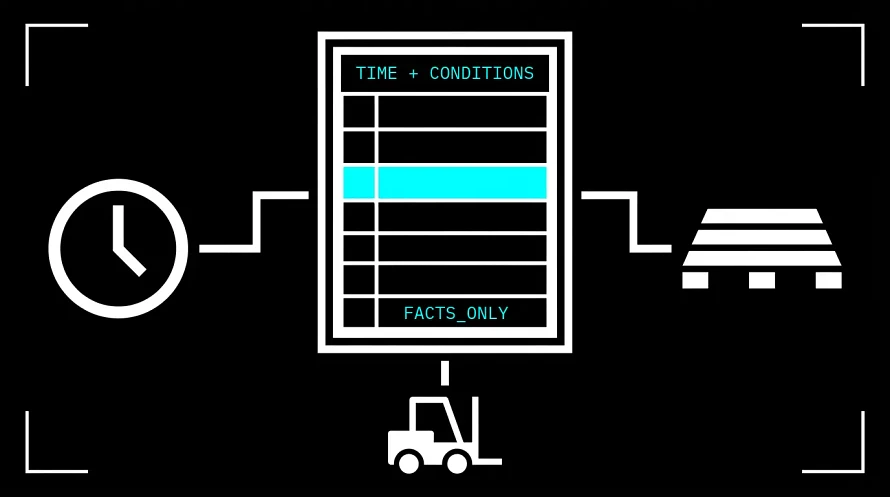
A central workplace log sheet connected to symbols for time, pallet handling and industrial work, representing a factual record of an incident and its conditions

That's it. No drama. When somebody later asks “can you recreate it?” or “why was your rate down?”, you're not guessing. You've got a date, a time, a reason and a name.

A few rules for doing this safely:

  • Write it at the break, not mid-run. Phones and notepads out on the line are how faults get missed.
  • Facts, not feelings. “Aisle blocked twenty minutes” beats “this place is a joke.”
  • Your own notes only. Write about what you did and saw. Don't copy company documents or confidential data.
  • Check your workplace's rules on phones and notes, and follow them.

Industrial Psychology: Ask in a Way That Can't Be Turned Against You

The second half of this is how you talk about it.

You're not trying to win an argument with a manager. You're trying to make the problem visible without handing anyone a reason to mark you as difficult. That means calm, short, factual, and, where possible, in writing.

Some lines that work:

  • “Can you confirm that target in writing, please?”
  • “If the line is running slow, which do you want protected, the rate or the checks?”
  • “I want to hit this safely. What should I drop if the two clash?”
  • “I raised this on Tuesday. Has anything changed?”

Say them flat. No heat, no sarcasm, no audience. If you can, follow up with a short message so there's a written trail: “Thanks for talking this through earlier. To confirm, the target for this job is X, and if the line is down I should do Y.”

A couple of honest points.

Some managers count everything: every minute, every scrap, every label. Arguing with someone like that rarely changes anything. Numbers they can't dispute sometimes do.

And HR works for the company. That's what it's there for. It doesn't make HR the enemy, but it means your record is the one thing in the room that works for you. If your workplace has a union rep or a safety rep, bring them in early rather than late.

One exception. If something is dangerous right now, don't wait to write it up. Say so immediately, through whatever safety route your site has. The record is for everything else.

Production flow, palletised goods and an industrial truck converge around a pause symbol, illustrating the conflict between performance targets, safe working conditions and physical limits

Physical Routine: Targets Are Paid for by Bodies

A target set on the best day the line ever had will be paid for by someone's body on every other day.

Watch for the signs. Breaks getting skipped to hold the rate. Rushing between jobs. Running to cover for a gap. These are the moments that wear out knees, backs and tempers, and the moments that cause the mistakes nobody planned for.

In my experience, skipped breaks come back later as errors and slower pace, not as extra output. You don't have to take my word for it. Your own log will show it.

When a number depends on you running, rushing or skipping, write that down. “Hit the rate by skipping the break” is a very different sentence from “hit the rate.” It tells the story the headline number hides.

Exit Architecture: The Record Is Portable

Here's the bit nobody tells you.

A written record of the faults you caught, the rates you hit, the fixes you suggested and the conditions you worked in is a CV nobody can take off you. It stays with you if you change jobs. It stays with you if you get moved. It stays with you if the company reorganises around you.

An independent document card with a cyan marker sits in front of symbols representing production, warehouse handling and industrial logistics, symbolising portable evidence of a worker’s experience and achievements

And the habit behind it, one line, written down, at the end of the day, is exactly the habit that builds anything of your own. Side projects don't fail because of big mistakes. They fail because nothing gets written down and everything lives in your head until a bad week wipes it.

Notes are the first asset. They cost nothing and nobody can rota you off them.

What Just Happened (In Case You're Reading This on a Ten-Minute Break)

  • A spoken report disappears. A written one answers the question.
  • Log date, time, job, conditions, what happened, who you told, what they said.
  • Write at the break, facts only, and follow your site's rules on notes.
  • Ask calmly, in writing where you can: confirm the target, and say which thing to protect if two clash.
  • Anything dangerous right now goes through your safety route immediately.
  • Targets are paid for by bodies. Note it when the number depends on skipping or rushing.
  • Your record goes with you wherever you go.

Start the Habit, Then Build on It

The record is the first thing you build. The rest comes after.

The 2-Hour Machine-Side Asset Blueprint is free at clockinclass.com. It's a straight plan for turning the hours the job doesn't own into the first working part of something that answers to you.

No fake smiles. No corporate waffle. Just a plan, and a record to prove you followed it.

Write it down. Then build.

Read next: The Stay-or-Go Trap: Five Signs It's Time to Change Jobs (and What to Do Before You Do)

Image

Clock In Class — notes from the floor

The number on your payslip is the best-case number.

It's what you earn per hour if the job takes exactly the hours it pays for, costs you nothing to get to, and never reaches into the rest of your week. I don't know a single floor where that's true.

On my floor you can't book an appointment, plan a school run or promise anyone a weekend, because the pattern can change on you. Twelve-hour days get banked as holiday you take later, usually when they need you somewhere else anyway. I cycle in, so my commute costs me time, not fuel. Most people aren't that lucky. None of that shows up on the payslip, and all of it is a cost.

Here's the short answer, in case you're on a break: your real hourly rate is what you take home after the cost of getting to work, divided by every hour the job takes from you, paid or not. You can work it out in five minutes. Nobody's going to do it for you.

One note first. Rules about unpaid time differ from country to country. This is maths, not legal advice.

Technical Sovereignty: The Five-Minute Sum

Grab a pen. You need five numbers for a normal shift.

  1. Pay for one shift. Use before tax or after, but be consistent.
  2. What it costs you to get there and do the job. Fuel, fares, parking, boots, gloves, uniform. Divide anything bought occasionally down to a per-shift figure.
  3. Paid hours. The hours on your payslip.
  4. Unpaid time. The minutes nobody pays: handover, walking in from the gate, changing, waiting for the line to be signed off, mandatory briefings.
  5. Commute. Round trip, in hours.

Then do this:

(Pay − costs) ÷ (paid hours + unpaid hours + commute hours) = your real hourly rate.

A worked example

Say you're paid $20 an hour for an eight-hour shift. That's $160.

Getting there and kit cost you $8 a shift. That leaves $152.

The job takes eight paid hours, half an hour of unpaid handover and walking in, and an hour on the road. That's 9.5 hours.

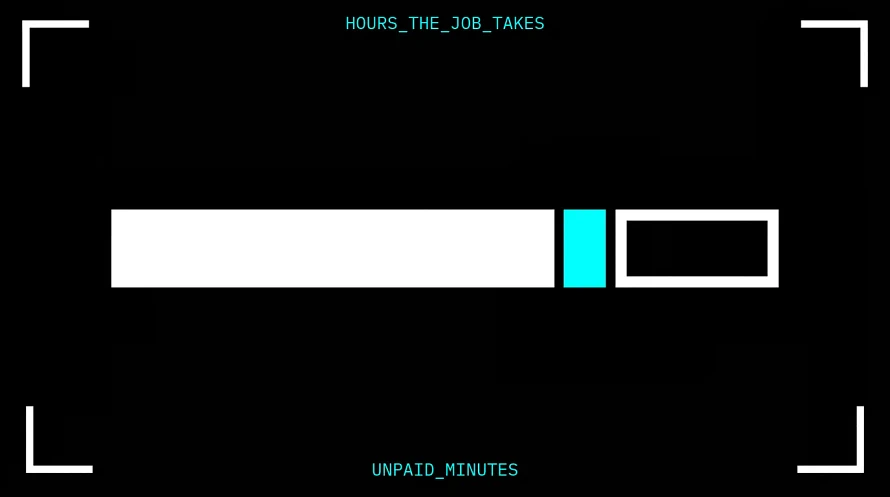
A shift bar with a small unpaid segment in cyan and a commute segment

$152 ÷ 9.5 = $16.00 an hour.

Twenty on the payslip. Sixteen in real life. That's a 20 percent pay cut nobody announced.

Now try a twelve-hour day with the same costs and the same unpaid time. Pay is $240. Take off the $8, you have $232. The job takes 12 + 0.5 + 1 = 13.5 hours. $232 ÷ 13.5 = $17.19.

Long days do improve the number a little, because the commute and the unpaid minutes get spread over more paid hours. That's part of why they get offered. But the sum only counts money and hours. Your legs bill separately. We'll get to that.

Industrial Psychology: Why Nobody Shows You This Number

Nobody's hiding it from you on purpose. It's just that nobody benefits from you knowing it.

When the number stays vague, every request sounds small. Stay half an hour. Come in early. Cover a different department. Take the long days and get Friday off. Each one looks cheap when you only look at the hours you're being asked for.

Price them against your real rate and the picture changes.

The pattern I've seen is that a perk and a price tag arrive in the same sentence. “You can bank the extra hours and take them later” is the perk. The price is that you may not be able to take them when you actually need them. Banked hours you can't use when you want them are worth less than the same hours paid.

A price tag with one highlighted block

Before you say yes to anything flexible, ask three questions:

  • What does this cost me in hours, including travel and unpaid time?
  • What does it cost me in sleep and recovery?
  • When can I actually take what I'm being offered, and who decides?

You might still say yes. Plenty of people have good reasons to. The point is that you're saying yes to something you've priced, not something you've guessed.

And if you want to raise any of it with your employer, you now have a calm, factual way to do it: the numbers, written down. Whether they can or will change anything is a different question. But you'll know where you stand, which is more than most people on the floor can say.

Physical Routine: Add the Cost Your Payslip Doesn't Carry

The sum above counts money and clock hours. It doesn't count what the job does to you.

On a long-day week my legs burn from morning to night. That's not a feeling that appears on any spreadsheet, but it's a real cost, and I'm paying it with something I can't earn back.

A rate that costs you your knees, your back or your sleep three days a week isn't the same rate as one that doesn't. Two jobs paying the same per hour can take very different amounts out of you.

If you want to put a rough number on it, try this. After a hard run of shifts, how many hours does it take you to feel like yourself again? Count those as hours the job took. Add them to the bottom of the sum.

You don't need to be exact. You need to stop pretending the figure is zero.

Exit Architecture: What Two Hours Is Worth

Here's why this matters for building something of your own.

Your real rate puts a price on your time. At sixteen dollars an hour, two hours is thirty-two dollars. That's what the job currently pays for them.

Now turn it around. If you spent those same two hours on something of your own, what would it need to earn per hour to beat that? And how long can you afford to work for less than that while it grows?

A level scale: the job’s hours on one end, your own project on the other

You're not trying to get rich this month. You're trying to find out whether your hours are better spent. You can't answer that without knowing what they're worth right now.

That's also why the first step isn't “start a business.” It's “do the sum.”

What Just Happened (In Case You're Reading This on a Ten-Minute Break)

  • The payslip number is the best-case number.
  • Real rate = (pay − costs) ÷ (paid hours + unpaid hours + commute hours).
  • In the example, $20 an hour on the payslip was $16 in real life.
  • Price every flexible request before you say yes: hours, sleep, and when you can actually take what you're offered.
  • Recovery time is a cost too. Stop counting it as zero.
  • Your real rate is the price of your two hours. Know it before you spend them.

Do the Sum, Then Do Something With It

The 2-Hour Machine-Side Asset Blueprint has a Real Rate worksheet built in, so you can do all of this on paper in five minutes.

The 2-Hour Machine-Side Asset Blueprint is free at clockinclass.com. Work out your real rate, find your real two hours, pick one thing to build, and set the review date.

No fake smiles. No corporate waffle. Just the number the payslip won't show you.

You've been paid for your hours for years. Find out what they're actually worth.

Read next: Keep Your Own Record: How to Push Back on Impossible Targets Without Getting Marked

Image

Clock In Class — notes from the floor

My alarm goes off before five. I cycle in. On a long-day week, my legs burn from the first hour to the last, and by the time I'm home I'm tired in a way a good night's sleep wouldn't fix, even if I got one.

I've also noticed what tiredness does to a floor. People get shorter with each other. Small things turn into arguments. Somebody you'd have laughed with last month is suddenly a problem. When people get more tired, they get angrier, and nobody puts that on the schedule.

Here's the plain version of the problem: sleep is the first thing a shift pattern takes, and the last thing anyone budgets for.

One thing before we start. I'm not a doctor. This is twenty-two years of working shifts, plus the mainstream advice you'll find from sleep and health bodies. If your sleep is properly wrecked, talk to a doctor. Don't take your advice from a bloke who runs a machine.

The short answer, if you're on a break: shift work pulls you out of step with your body clock, so you sleep shorter and lighter than the hours suggest. You can't fully fix that. You can protect it, with a fixed sleep window for each type of shift, a dark and quiet room, light and caffeine used on purpose, and a two-week log so you stop guessing.

Physical Routine: What the Schedule Does to Your Body Clock

Your body runs on a clock. Most sleep guidance describes it the same way: it expects light and activity in the day, dark and rest at night, and it likes a routine.

A rotating pattern doesn't care about any of that. One week you're up at five. The next you're asked to stay late. Some seasons there's a night shift on offer, usually pitched as a perk: bank the extra hours, take them later. The clock never gets a stable signal, so it never settles.

Clock hand fixed at the top while the shift start sits elsewhere on the ring

The usual result, according to most of what's published on this, is sleep that's shorter and lighter than the number of hours in bed suggests. You can lie down for seven hours and still wake up like you've done two.

Early starts count too. If you're up at five, you don't lose the start of your night. You lose the end of it. The alarm cuts off the part of sleep you needed most, and a late night on top of that just stacks the debt.

None of this is weakness. You can't out-tough a body clock. You can only work with it.

Industrial Psychology: Tired Floors Are Angry Floors

Before you decide someone on your shift is a problem, ask a different question: how did they sleep?

Tired people have a shorter fuse. They misread tone. They snap, then feel bad, then snap again. Over a long run of early starts and changing patterns, a whole department can turn sour without anyone doing anything wrong, except being exhausted.

I'm not saying every difficult person on the floor is just tired. Some people are difficult. But it's worth keeping in mind before you take a bad mood personally, and before you go into work already braced for a fight because you didn't sleep.

There's a harder side too. Tiredness slows reactions and dulls attention. If you drive a truck, run a machine, or lift all day, being too tired is a safety issue, not a character flaw. It's allowed to be a real sentence on the floor:

“I'm not safe to run this right now. Can we swap, or can I take a break?”

Say it calmly. Say it early. Don't wait until the near-miss.

An almost empty battery

Technical Sovereignty: Six Rules to Protect Your Sleep

These are the common, widely repeated ones. None of them is magic. Together they stack up.

1. Give every shift type a sleep window, and defend it. Early start, long day, overtime week: each one gets a fixed bedtime and wake time. Write them on the fridge. When someone asks you for something inside the window, the answer is already decided.

2. Make the room dark, cool and quiet. Blackout curtains or a sleep mask. Earplugs if the house is loud. Phone charging across the room, not under your pillow. It sounds boring because it works.

3. Use light on purpose. Bright light helps you feel awake when you need to be sharp. Dim, warm light and no screens in the last stretch before bed helps you wind down. Many shift workers also wear sunglasses on the way home after a very early or very late finish, so the morning sun doesn't tell the body it's time to wake up.

4. Time your caffeine. Have it early in the shift, not in the last few hours before you plan to sleep. Caffeine lingers longer than people think.

5. Don't use alcohol as a sleeping pill. It can knock you out faster, and it usually wrecks the quality of the sleep that follows. You pay for it the next day.

6. Nap before a long run if you can. A short nap before a long shift is a common tactic. Keep it short so it doesn't flatten the main sleep afterwards.

And tell the house. Your family needs to know your sleep window the same way they know your shift. It's much easier to protect something people can see.

The two-week sleep log

Guessing is the enemy. For two weeks, write one line a day. It takes ninety seconds.

  • Shift type that day.
  • Time you went to bed, and roughly when you fell asleep.
  • Time you woke up.
  • How you felt, one to five.
  • Anything unusual: late caffeine, noisy night, a drink, a bad day.

A log sheet with three entries, one highlighted

After two weeks, look for patterns. Which shift type wrecks you? Which routine actually works? You'll also have something concrete to take to a doctor if you need to, or to a supervisor if you want to talk about the schedule. A written log is harder to wave away than “I'm tired.”

Exit Architecture: Sleep Is the Budget Your Side Project Runs On

Here's where it connects to everything else we're doing.

The two hours you're trying to find for something of your own only exist if you've slept. Skip sleep to build, and you'll make mistakes on the line, snap at the people you need, and drop the project within a month. I've seen that pattern in myself, more than once.

So the rule is simple: sleep outranks the plan. On a bad week, protect the smallest version of the work: twenty minutes, one line written down, and let the rest go. Zero never counts, but wrecked doesn't count either.

This isn't about becoming a machine that sleeps efficiently. It's about not spending the one thing you can't earn back.

What Just Happened (In Case You're Reading This on a Ten-Minute Break)

  • Shift patterns pull you out of step with your body clock, so sleep gets shorter and lighter.
  • Tired floors are angry floors. Check your sleep before you judge a bad mood.
  • Too tired to work safely is a real reason to speak up.
  • Fixed sleep windows, a dark and quiet room, light and caffeine on purpose, no alcohol as a sleeping pill.
  • Keep a two-week sleep log. Ninety seconds a day.
  • Sleep outranks the side project. Every time.

This is general information from someone who works shifts, not medical advice.

Protect the Hours You Actually Have

The 2-Hour Machine-Side Asset Blueprint is built around one idea: you only get two hours if you protect them, and that means protecting sleep first.

The 2-Hour Machine-Side Asset Blueprint is free at clockinclass.com. It walks you through finding your real two hours, picking one thing to build, and setting a review date, with a floor for the weeks that wreck you.

No fake smiles. No corporate waffle. Just a straight plan for the hours the job doesn't own.

Sleep first. Then build.

Read next: The Payslip Lie: What You're Really Paid Per Hour (and How to Work It Out in Five Minutes)

Image

Clock In Class — notes from the floor

My normal shift is six till half one. That's the good week.

Some weeks it's three ten-hour days and a short Thursday, so we can buy a Friday off. Some weeks it's twelves. Some seasons it rotates. The team votes on the pattern, the majority wins, and I've been on the losing side of that vote.

You can't book a dentist, plan a school run or promise anyone a Sunday. So when someone says “just find an hour a day for your side project,” I want to ask which day they mean.

Here's the short answer, in case you're on a break: you don't find two clear hours. You build a plan that survives your worst week, then use the two hours whenever the week allows.

The rest of this is how.

Industrial Psychology: The Better-Week Lie

Every project I ever dropped died the same way. I told myself I'd start properly once things settled down.

Things never settle down.

I've dropped a jewellery shop on Facebook, a few online stores on a few platforms, a T-shirt brand, and a website I deleted the day after I built it. None of them died because the idea was bad. They died in the first rough week, when the pattern changed, the legs hurt, and the project was the easiest thing to put down.

“I'll start when it calms down” sounds like patience. It's a decision to wait for a week that doesn't exist.

Terminal prompt waiting with a blinking cursor

Most employers won't hand you a predictable schedule. Work gets busy, machines break, someone's off sick, orders land late. The floor runs on whatever the week needs, and you absorb the difference. So your plan has to absorb it too.

Technical Sovereignty: Plan for the Worst Week, Not the Best One

Most advice assumes a normal week: finish at five, home by six, two clear hours before bed. If that were your week, you wouldn't be reading this.

Try this instead. Sort every week you work into one of three types, and give each type a target in advance.

  • Green week. Normal finish, normal sleep. Target: two hours.
  • Amber week. Long days, overtime, or a pattern change. Target: twenty minutes a day.
  • Red week. Twelves, stacked overtime, or you're running on fumes. Target: five minutes. One line written down: the next step, for when the week turns.

Three target bars: 120, 20 and 5 minutes

You decide in advance, so you never have to negotiate with yourself when you're knackered.

Twenty minutes sounds like nothing. It isn't. Twenty minutes is one message, one page, one phone call, one test. Do it five days running, and you've done more than most people manage in a month of “I'll start Saturday.”

The red-week target isn't about progress. It's proof you're still in the game. Twenty minutes counts. Zero never does, because zero is how a bad week turns into a dropped project.

What twenty minutes can actually buy

Staring at an amber week with no idea what to do with the time? Pick from this list:

  • Write down who your project is for, in one sentence.
  • Draft one post, one page or one listing. Rough, not pretty.
  • Ask one real person one real question about it.
  • Fix the one thing you already know is broken.
  • Write tomorrow's single task on a card.
  • Look up the one thing you've been guessing at.
  • Send the one message you've been putting off.

None of these needs a laptop and a quiet room. Most work on a phone, on a break, in a car park.

Anchor it to the shift, not the clock

“Seven till nine every evening” breaks the first time the shift changes. Anchor your time to something that moves with your shift instead:

  • After I finish. “Within an hour of getting home,” not “at seven.”
  • Before the day swallows it. On an early start, you're done by the afternoon. Take the first hour straight away, before errands and tiredness take it for you.
  • After the family's sorted. Be honest about this one. Two hours only exists once the kids, the house and the chores have had their share.

Pick one anchor for each shift type and write it down.

Physical Routine: Don't Pay for It With Your Sleep

Here's where good intentions go to die.

On a long-day week, my legs burn from the first hour to the last. By the time I'm home, I'm tired in a way no clever plan fixes. And tired people get angrier. Shorter fuse, sharper tongue, worse decisions, with colleagues and with yourself.

If the side project costs you sleep, it will cost you the job that's paying for it. You'll make mistakes on the line, snap at people you need, and quit the project within a month.

So sleep sits above the plan. On an amber week, if the choice is twenty minutes of work or twenty minutes of sleep, sleep wins. Build that into the rule: no side work once you've hit your sleep window. A plan that wrecks you isn't a plan. It's just a slower way to burn out.

Exit Architecture: Use the Dead Time

On a good run, half my shift is watching. Hands free. Eyes on the machine. Head available. Some days I stand there thinking I'm wasting my life.

That's the wrong frame. Watching time isn't dead if you use it to think.

Don't pull your phone out mid-run. That's how faults get missed, and how you get called to the office for the wrong reason. Think it through in your head instead: today's one task, tomorrow's fix, the one line you'll write on your next proper break. Then get it down the second you're stood down.

The same goes if you pick, pack or drive. The walk to the next aisle, the wait at the dock, the gap between loads. Wherever a phone isn't safe or isn't allowed, your head still is. You're paid for your hands and your attention. Nobody's paying for the thoughts you have in the gaps, which means those thoughts can be yours.

Head silhouette with one active thought

What Just Happened (In Case You're Reading This on a Ten-Minute Break)

  • You won't find two clear hours. You'll build a plan that survives your worst week.
  • Sort every week into green, amber or red: two hours, twenty minutes, five minutes.
  • Twenty minutes counts. Zero never does.
  • Anchor your time to the shift, not the clock.
  • Sleep outranks the plan. Every time.
  • Use the watching time to think, not to scroll.

Build the Plan Before the Next Schedule Lands

None of this works as a mood. It works on paper, with a date attached.

The 2-Hour Machine-Side Asset Blueprint is free at clockinclass.com. It's the worksheets behind everything above: find your real two hours, pick the one thing you're building, and set the review date before the first bad week arrives.

No fake smiles. No corporate waffle. Just a straight plan for the hours the job doesn't own.

Stop waiting for the better week. Build for the one you've got.

Read next: What Shift Work Does to Your Sleep (and How to Protect It)