
Clock In Class — notes from the floor
I had a job that had to run slow. Heavy material, tricky tension, no way round it. Partway through the run, the front of the line slowed down by itself while the rest carried on at its usual pace. It wasn't the first time. I'd had the same fault on a similar job the year before.
So I did what you're supposed to do. I stopped it, restarted it, ran on, and reported it to my manager that same day.
Some time later, a more senior manager and a mechanic came over and asked what had happened. I told them. Then the senior manager asked me to recreate it.
I couldn't. It was running fine. The same reel, at the same speed, before the fault and after it. The mechanic had a theory about a part slipping, which didn't fit the facts, and the answer I got was that it would probably sort itself out. Then they both went away.
I report issues regularly. The kit is old. Faults keep coming. And I know how this ends. One day one of them will land on a form with my name typed next to it, not because I did anything wrong, but because I was the one standing there.
That's the whole lesson. A spoken report disappears. A written one answers the question.
Here's the short answer, in case you're on a break: you don't beat an impossible target by arguing with it. You make the conditions impossible to ignore. Write down what happened, ask for the target in writing, and ask which thing they want protected when two things clash.
One note first. This is practical advice from someone on the floor, not legal advice. Workplaces, contracts and rules differ everywhere.
Technical Sovereignty: The Record That Answers “Can You Recreate It?”
The habit is simple. Write down what happens, when it happens, in plain words. It takes ninety seconds.
For every event worth noting, capture:
- Date and time.
- The job. What you were running, picking or moving.
- The conditions. Speed, rate, load, staffing, equipment state.
- What happened. Facts, in order. No adjectives.
- Who you told, and when.
- What they said.
Here's what an entry looks like on a machine:
- Tuesday 10:40. Long-run job, heavy material, running slow as planned.
- Front of the line slowed while the other unit kept pace. Stopped, restarted, ran on.
- Told my direct manager at 10:55. Reply: “Keep an eye on it.”
And on a pick floor:
- Thursday 14:10. Aisle 12 blocked by pallets for twenty minutes. Pick rate down for the whole zone.
- Told supervisor at 14:15. Reply: “I'll get someone on it.” Cleared at 14:35.
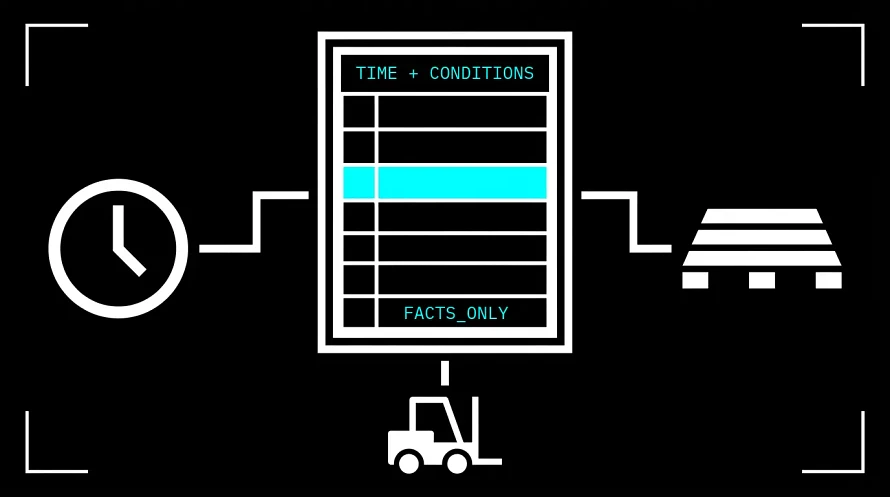
That's it. No drama. When somebody later asks “can you recreate it?” or “why was your rate down?”, you're not guessing. You've got a date, a time, a reason and a name.
A few rules for doing this safely:
- Write it at the break, not mid-run. Phones and notepads out on the line are how faults get missed.
- Facts, not feelings. “Aisle blocked twenty minutes” beats “this place is a joke.”
- Your own notes only. Write about what you did and saw. Don't copy company documents or confidential data.
- Check your workplace's rules on phones and notes, and follow them.
Industrial Psychology: Ask in a Way That Can't Be Turned Against You
The second half of this is how you talk about it.
You're not trying to win an argument with a manager. You're trying to make the problem visible without handing anyone a reason to mark you as difficult. That means calm, short, factual, and, where possible, in writing.
Some lines that work:
- “Can you confirm that target in writing, please?”
- “If the line is running slow, which do you want protected, the rate or the checks?”
- “I want to hit this safely. What should I drop if the two clash?”
- “I raised this on Tuesday. Has anything changed?”
Say them flat. No heat, no sarcasm, no audience. If you can, follow up with a short message so there's a written trail: “Thanks for talking this through earlier. To confirm, the target for this job is X, and if the line is down I should do Y.”
A couple of honest points.
Some managers count everything: every minute, every scrap, every label. Arguing with someone like that rarely changes anything. Numbers they can't dispute sometimes do.
And HR works for the company. That's what it's there for. It doesn't make HR the enemy, but it means your record is the one thing in the room that works for you. If your workplace has a union rep or a safety rep, bring them in early rather than late.
One exception. If something is dangerous right now, don't wait to write it up. Say so immediately, through whatever safety route your site has. The record is for everything else.
Physical Routine: Targets Are Paid for by Bodies
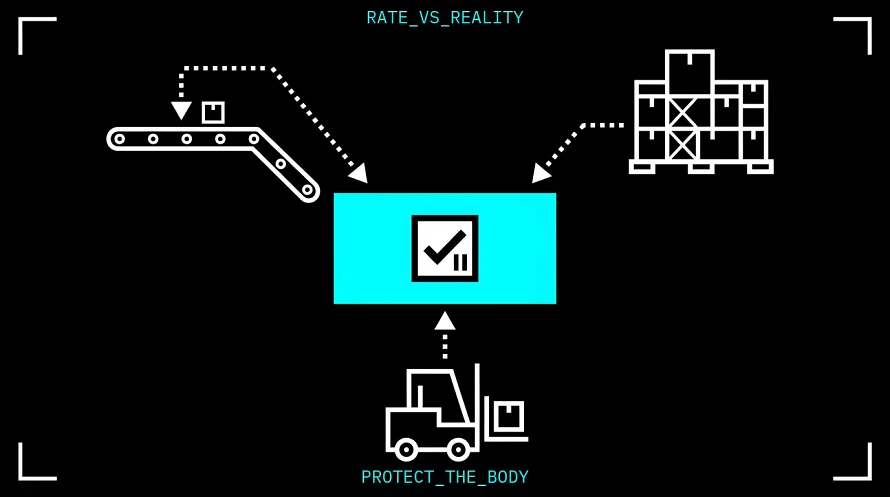
A target set on the best day the line ever had will be paid for by someone's body on every other day.
Watch for the signs. Breaks getting skipped to hold the rate. Rushing between jobs. Running to cover for a gap. These are the moments that wear out knees, backs and tempers, and the moments that cause the mistakes nobody planned for.
In my experience, skipped breaks come back later as errors and slower pace, not as extra output. You don't have to take my word for it. Your own log will show it.
When a number depends on you running, rushing or skipping, write that down. “Hit the rate by skipping the break” is a very different sentence from “hit the rate.” It tells the story the headline number hides.
Exit Architecture: The Record Is Portable
Here's the bit nobody tells you.
A written record of the faults you caught, the rates you hit, the fixes you suggested and the conditions you worked in is a CV nobody can take off you. It stays with you if you change jobs. It stays with you if you get moved. It stays with you if the company reorganises around you.
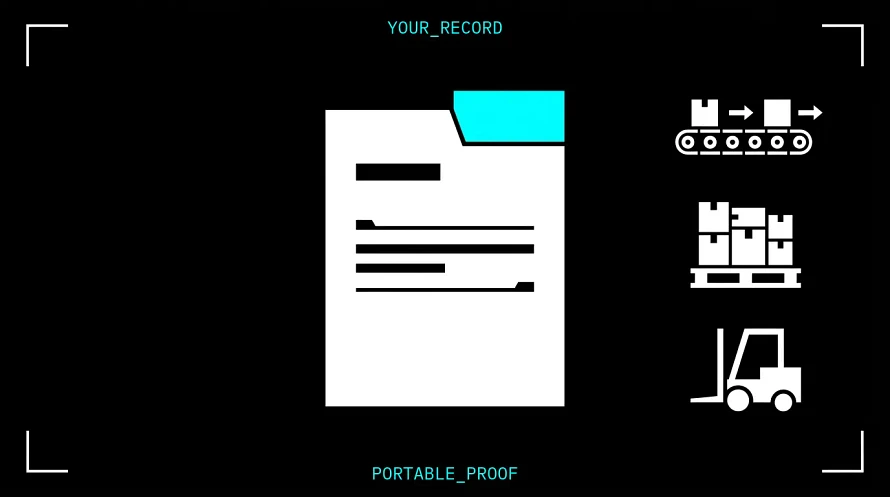
And the habit behind it, one line, written down, at the end of the day, is exactly the habit that builds anything of your own. Side projects don't fail because of big mistakes. They fail because nothing gets written down and everything lives in your head until a bad week wipes it.
Notes are the first asset. They cost nothing and nobody can rota you off them.
What Just Happened (In Case You're Reading This on a Ten-Minute Break)
- A spoken report disappears. A written one answers the question.
- Log date, time, job, conditions, what happened, who you told, what they said.
- Write at the break, facts only, and follow your site's rules on notes.
- Ask calmly, in writing where you can: confirm the target, and say which thing to protect if two clash.
- Anything dangerous right now goes through your safety route immediately.
- Targets are paid for by bodies. Note it when the number depends on skipping or rushing.
- Your record goes with you wherever you go.
Start the Habit, Then Build on It
The record is the first thing you build. The rest comes after.
The 2-Hour Machine-Side Asset Blueprint is free at clockinclass.com. It's a straight plan for turning the hours the job doesn't own into the first working part of something that answers to you.
No fake smiles. No corporate waffle. Just a plan, and a record to prove you followed it.
Write it down. Then build.
Read next: The Stay-or-Go Trap: Five Signs It's Time to Change Jobs (and What to Do Before You Do)