
Clock In Class — notes from the floor
My normal shift is six till half one. That's the good week.
Some weeks it's three ten-hour days and a short Thursday, so we can buy a Friday off. Some weeks it's twelves. Some seasons it rotates. The team votes on the pattern, the majority wins, and I've been on the losing side of that vote.
You can't book a dentist, plan a school run or promise anyone a Sunday. So when someone says “just find an hour a day for your side project,” I want to ask which day they mean.
Here's the short answer, in case you're on a break: you don't find two clear hours. You build a plan that survives your worst week, then use the two hours whenever the week allows.
The rest of this is how.
Industrial Psychology: The Better-Week Lie
Every project I ever dropped died the same way. I told myself I'd start properly once things settled down.
Things never settle down.
I've dropped a jewellery shop on Facebook, a few online stores on a few platforms, a T-shirt brand, and a website I deleted the day after I built it. None of them died because the idea was bad. They died in the first rough week, when the pattern changed, the legs hurt, and the project was the easiest thing to put down.
“I'll start when it calms down” sounds like patience. It's a decision to wait for a week that doesn't exist.
Most employers won't hand you a predictable schedule. Work gets busy, machines break, someone's off sick, orders land late. The floor runs on whatever the week needs, and you absorb the difference. So your plan has to absorb it too.
Technical Sovereignty: Plan for the Worst Week, Not the Best One
Most advice assumes a normal week: finish at five, home by six, two clear hours before bed. If that were your week, you wouldn't be reading this.
Try this instead. Sort every week you work into one of three types, and give each type a target in advance.
- Green week. Normal finish, normal sleep. Target: two hours.
- Amber week. Long days, overtime, or a pattern change. Target: twenty minutes a day.
- Red week. Twelves, stacked overtime, or you're running on fumes. Target: five minutes. One line written down: the next step, for when the week turns.
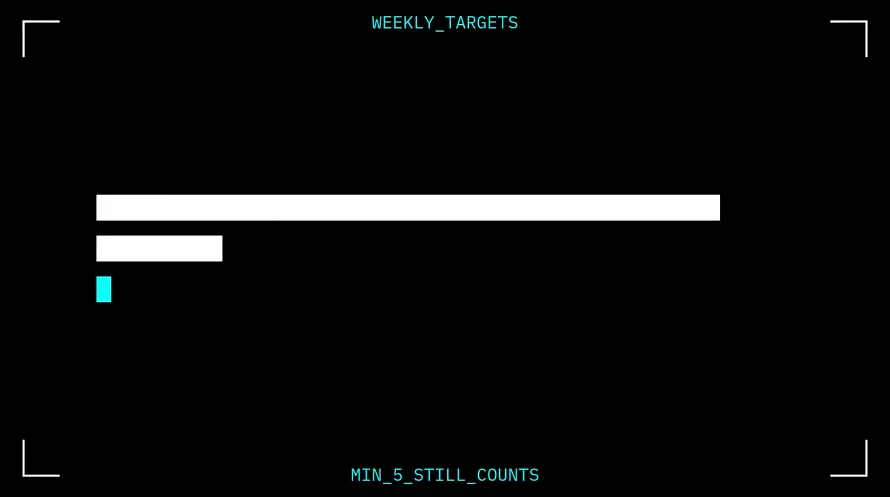
You decide in advance, so you never have to negotiate with yourself when you're knackered.
Twenty minutes sounds like nothing. It isn't. Twenty minutes is one message, one page, one phone call, one test. Do it five days running, and you've done more than most people manage in a month of “I'll start Saturday.”
The red-week target isn't about progress. It's proof you're still in the game. Twenty minutes counts. Zero never does, because zero is how a bad week turns into a dropped project.
What twenty minutes can actually buy
Staring at an amber week with no idea what to do with the time? Pick from this list:
- Write down who your project is for, in one sentence.
- Draft one post, one page or one listing. Rough, not pretty.
- Ask one real person one real question about it.
- Fix the one thing you already know is broken.
- Write tomorrow's single task on a card.
- Look up the one thing you've been guessing at.
- Send the one message you've been putting off.
None of these needs a laptop and a quiet room. Most work on a phone, on a break, in a car park.
Anchor it to the shift, not the clock
“Seven till nine every evening” breaks the first time the shift changes. Anchor your time to something that moves with your shift instead:
- After I finish. “Within an hour of getting home,” not “at seven.”
- Before the day swallows it. On an early start, you're done by the afternoon. Take the first hour straight away, before errands and tiredness take it for you.
- After the family's sorted. Be honest about this one. Two hours only exists once the kids, the house and the chores have had their share.
Pick one anchor for each shift type and write it down.
Physical Routine: Don't Pay for It With Your Sleep
Here's where good intentions go to die.
On a long-day week, my legs burn from the first hour to the last. By the time I'm home, I'm tired in a way no clever plan fixes. And tired people get angrier. Shorter fuse, sharper tongue, worse decisions, with colleagues and with yourself.
If the side project costs you sleep, it will cost you the job that's paying for it. You'll make mistakes on the line, snap at people you need, and quit the project within a month.
So sleep sits above the plan. On an amber week, if the choice is twenty minutes of work or twenty minutes of sleep, sleep wins. Build that into the rule: no side work once you've hit your sleep window. A plan that wrecks you isn't a plan. It's just a slower way to burn out.
Exit Architecture: Use the Dead Time
On a good run, half my shift is watching. Hands free. Eyes on the machine. Head available. Some days I stand there thinking I'm wasting my life.
That's the wrong frame. Watching time isn't dead if you use it to think.
Don't pull your phone out mid-run. That's how faults get missed, and how you get called to the office for the wrong reason. Think it through in your head instead: today's one task, tomorrow's fix, the one line you'll write on your next proper break. Then get it down the second you're stood down.
The same goes if you pick, pack or drive. The walk to the next aisle, the wait at the dock, the gap between loads. Wherever a phone isn't safe or isn't allowed, your head still is. You're paid for your hands and your attention. Nobody's paying for the thoughts you have in the gaps, which means those thoughts can be yours.

What Just Happened (In Case You're Reading This on a Ten-Minute Break)
- You won't find two clear hours. You'll build a plan that survives your worst week.
- Sort every week into green, amber or red: two hours, twenty minutes, five minutes.
- Twenty minutes counts. Zero never does.
- Anchor your time to the shift, not the clock.
- Sleep outranks the plan. Every time.
- Use the watching time to think, not to scroll.
Build the Plan Before the Next Schedule Lands
None of this works as a mood. It works on paper, with a date attached.
The 2-Hour Machine-Side Asset Blueprint is free at clockinclass.com. It's the worksheets behind everything above: find your real two hours, pick the one thing you're building, and set the review date before the first bad week arrives.
No fake smiles. No corporate waffle. Just a straight plan for the hours the job doesn't own.
Stop waiting for the better week. Build for the one you've got.
Read next: What Shift Work Does to Your Sleep (and How to Protect It)